Tuesday, May 26, 2009

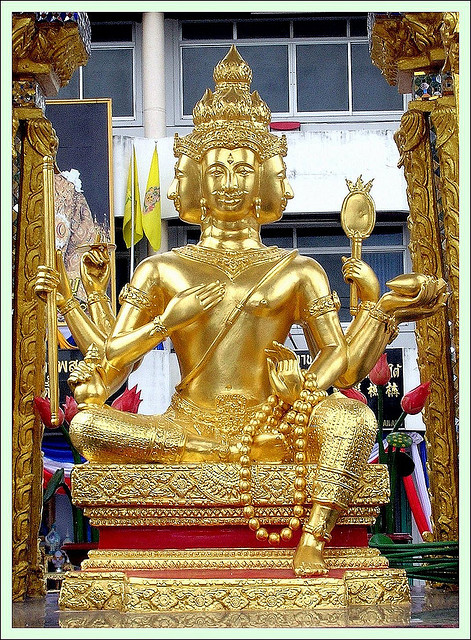
Lord Brahma 创造之神梵天(Phra Phrom)


四面神泰語名為 (匹碰~Phra Phom Si Na),有很多人會錯誤把都把四面神稱為四面佛,其實早於婆羅門教與佛經的記載,四面神是屬於天神而不是佛,所以應該稱之為四面神或大梵天王.大梵天王,因人界的誕生,連同啦拉天王、是屈令天王,一同派到人界,掌管不同的事,大梵天王常管創造萬物、啦拉天王掌管萬物生與死、是屈令天王掌管萬物法則定律的運行,所以四面神便有些人稱為創造之神。

造型:
 四面神這尊佛像有四個面孔和八隻手,其四個面孔面向東南西北四個不同的方向,也代表守護觀望世間四個方向,其八隻耳朵是用來聽取來自各方不同的求援聲,總括來說四面神是一位眼觀四方耳聽八面,聞聲而渡人求難的慈悲天王。而八隻手各持不同的法器~佛珠、法杖、經典、法螺、***、金露瓶、法鏡、一手結手印,同時這些法器與寶物也代表了不同的含意,分別代表賜給眾生,福德、健康、財富、智慧。

法器﹕
令旗:代表法力。 佛經:代表智慧。 法螺:代表賜福。 唸珠:代表輪回。 權杖:代表成就。甘露瓶:代表有求必應。 按胸手印:代表庇佑。 ***:代表消災、降魔、驅除煩惱。四面神會用這些不同的法器來施捨福報,財運、健康、智慧給前來求助的眾生。

典故:梵天,梵文为BRAHAMA,发音为布茹阿玛,古代音译为婆罗贺摩,有清净之意.梵天形象为四面四臂,常见的形象为四只手分别持莲花,念珠,水罐和吠陀圣典,盘坐于莲花之上.他的坐骑为白天鹅.他应该是在印度教和佛教里面都比较出名的一位.在佛教里他被吸收成为一名伟大的护教者,并且在佛陀成道之时劝请佛陀讲法.

  梵天在印度教里是作为三大天神之中的创造之神.很多佛教徒误认为印度教徒非常崇拜梵天.但是在实事上,印度几乎没有梵天的寺庙,大多数是把他的画像和另外两位大神合画在一起供奉.所以在印度教中,梵天的地位其实并不是非常高.这正符合了往世书中湿婆神曾经因为梵天对他说谎而给的诅咒,湿婆大神诅咒梵天将不会有自己的庙宇,并且祝福了维湿努神,说他将得到和自己一样的崇拜.要提到的一点是,梵天在泰国倒是得到的巨大的崇拜,泰国人修建了很多四面佛(即四面梵天)的像来供奉,不过似乎也是露天供奉的.

  梵天的故事,在印度教里也比较复杂.有些书中记载梵天诞生于维湿努神肚脐上的莲花之中,然后通过千年的苦修得到了净化具有创造能力.但是在<<湿婆往世书>>中,则是记载两位大神是同时存在的,他们约定相互进入对方的身体去看神体里面的整个宇宙.当梵天进入维湿努的身体之时,维湿努关闭了所有的出口,唯独留下了脐部,所以梵天从他的肚脐出生,因此被后人称为维湿努之子.两位大神还因此发动纷争,引发了后面湿婆林伽的出现.大多数印度教徒认为三位天神其实是同一真实的展现,不具有区别,为了众生的利益而上演各种游戏幻化的故事.个别教派将梵天视为普通的众生,因为从事各种善事和禅修得生梵界,这一点的看法和佛教非常相似. 

  梵天的妻子是著名的妙音天女萨茹阿斯瓦蒂,梵语SARASWATI,佛教经典里旧音为娑罗室伐底.是印度教中的知识,智慧,音乐和艺术女神. 在佛教密宗中也具有非常重要的位置,是掌握智慧的本尊. 梵天的住处,被称为布茹阿玛珞卡 (BRAHMA LOKA), 意译即梵天世界.

Brahma Gayatri Mantra - Gayathri Mantram of Lord Brahma Deva

《图文资料来自互连网》

Monday, May 25, 2009

Mahishasuramardini Stotram


Mahishasuramardini stotram is based on Devi mahatmyam in which Devi takes the forms of Durga, Lakshmi and Sarasvati to slay Madhu and Kaitabha, Mahishasura, and Sumbha and Nisumbha respectively. This stotra is said to have been composed by Ramakrishna Kavi about whom no details are available.]

Mahishasuramardini Stotram

Ayi giri nandini, nandhitha medhini,
Viswa vinodhini nandanuthe,
Girivara vindhya sirodhi nivasini,
Vishnu Vilasini Jishnu nuthe,
Bhagawathi hey sithi kanda kudumbini,
Bhoori kudumbini bhoori kruthe,
Jaya Jaya Mahishasura mardini,
Ramya kapardini, shaila Suthe. 1

(Victory and victory to you,
Oh darling daughter of the mountain,
Who makes the whole earth happy,
Who rejoices with this universe,
Who is the daughter of Nanda,
Who resides on the peak of Vindhyas,
Who plays with Lord Vishnu,
Who has a glittering mien,
Who is praised by other goddesses,
Who is the consort of the lord with the blue neck,
Who has several families,
Who does good to her family.
Who has captivating braided hair,
Who is the daughter of a mountain.
And who is the slayer of Mahishasura. )

Suravara varshini, durdara darshini,
Durmukhamarshani, harsha rathe,
Tribhuvana poshini, Sankara thoshini,
Kilbisisha moshini, ghosha rathe,
Danuja niroshini, Dithisutha roshini,
Durmatha soshini, Sindhu suthe,
Jaya Jaya Mahishasura mardini ,
Ramya kapardini, shaila Suthe. 2

(Victory and victory to you,
Oh darling daughter of the mountain,
Oh goddess who showers boons on devas,
Who punishes those who are undisciplined.
Who tolerates ugly faced ogres,
Who enjoys in being happy,
Who looks after the three worlds,
Who pleases lord Shiva,
Who removes effect of sins,
Who rejoices with the holy sound,
Who is angry on the progenies of Dhanu,
Who is angry with the children of Dithi,
Who discourages those with pride,
Who is the daughter of the Ocean,
Who has captivating braided hair,
Who is the daughter of a mountain.
And who is the slayer of Mahishasura. )

Ayi Jagadambha Madambha , Kadambha,
Vana priya vasini, Hasarathe,
Shikhari siromani, thunga Himalaya,
Srunga nijalaya, madhyagathe,
Madhu Madure, Mdhukaitabha banjini,
Kaitabha banjini, rasa rathe,
Jaya Jaya Mahishasura mardini ,
Ramya kapardini, shaila Suthe. 3

(Victory and victory to you,
Oh darling daughter of the mountain,
Oh , mother of the entire world,
Who loves to live in the forest of Kadambha trees,
Who enjoys to smile,
Who lives in the top peak of the great Himalayas
Who is sweeter than honey,
Who keeps the treasures of Madhu and Kaidabha,
Who is the slayer of Kaidabha,
Who enjoys her dancing,
Who has captivating braided hair,
Who is the daughter of a mountain.
And who is the slayer of Mahishasura.)

Ayi satha kanda, vikanditha runda,
Vithunditha shunda, Gajathipathe,
Ripu Gaja ganda , Vidhaarana chanda,
Paraakrama shunda, mrugathipathe,
Nija bhuja danda nipaathitha khanda,
Vipaathitha munda, bhatathipathe,
Jaya Jaya Mahishasura mardini ,
Ramya kapardini, shaila Suthe. 4

(Victory and victory to you,
Oh darling daughter of the mountain,
Oh Goddess who breaks the heads of ogres,
In to hundreds of pieces,
Who cuts the trunks of elephants in battle,
Who rides on the valorous lion,
Which tears the heads of elephants to pieces,
Who severs the heads of the generals of the enemy,
With her own arms,
Who has captivating braided hair,
Who is the daughter of a mountain.
And who is the slayer of Mahishasura.)

Ayi rana durmathaShathru vadhothitha,
Durdhara nirjjara, shakthi bruthe,
Chathura vicharadureena maha shiva,
Duthatkrutha pramadhipathe,
Duritha Dureeha, dhurasaya durmathi,
Dhanava dhutha kruithaanthamathe,
Jaya Jaya Mahishasura mardini ,
Ramya kapardini, shaila Suthe. 5

(Victory and victory to you,
Oh darling daughter of the mountain,
Oh Goddess who has the strength which never diminishes,
To gain victory over enemies in the battle field,
Who made Pramatha, the attendant of Lord Shiva,
Known for his tricky strategy, as her assistant,
Who took the decision to destroy the asuras,
Who are bad people, with evil thoughts and mind,
Oh Goddess who has captivating braided hair,
Who is the daughter of a mountain.
And who is the slayer of Mahishasura.)

Ayi saranagatha vairi vadhuvara,
Veera varaa bhaya dhayakare,
Tribhuvana masthaka soola virodhi,
Sirodhi krithamala shoolakare,
Dimidmi thaamara dundubinadha mahaa
Mukharikruthatigmakare,
Jaya Jaya Mahishasura mardini ,
Ramya kapardini, shaila Suthe. 6

(Victory and victory to you,
Oh darling daughter of the mountain,
Oh Goddess who forgives and gives refuge,
To the heroic soldiers of the enemy rank,
Whose wives come seeking refuge for them,
Oh Goddess who is armed with trident ,
Ready to throw on the heads of those,
Who cause great pain to the three worlds,
Oh Goddess who shines likes the hot sun,
And who is aroused by sound of “Dhumi, Dhumi,”
Produced by the beating of drums by the devas,
Oh Goddess who has captivating braided hair,
Who is the daughter of a mountain.
And who is the slayer of Mahishasura.)

Ayi nija huum kruthimathra niraakrutha,
Dhoomra vilochana Dhoomra sathe,
Samara vishoshitha sonitha bheeja,
Samudhbhava sonitha bheejalathe,
Shiva shiva shumbha nishumbhamaha hava,
Tarpitha bhootha pisacha rathe,
Jaya Jaya Mahishasura mardini ,
Ramya kapardini, shaila Suthe. 7

(Victory and victory to you,
Oh darling daughter of the mountain,
Oh, Goddess who blew away hundreds of ogres,
Who had smoking eyes,
With her mere sound of “Hum”
Oh Goddess who is the blood red creeper,
Emanating from the seeds of blood,
Which fell in the battle field,
Oh Goddess who delights in the company of Lord Shiva,
And the ogres Shumbha and Nishumbha,
Who were sacrificed in the battle field,
Oh Goddess who has captivating braided hair,
Who is the daughter of a mountain.
And who is the slayer of Mahishasura. )

Dhanu ranushanga rana kshana sanga,
Parisphuradanga natath katake,
Kanaka pishanga brushathka nishanga,
Rasadbhata shrunga hatavatuke,
Kritha chaturanga bala kshithirangakadath ,
Bahuranga ratadhpatuke,
Jaya Jaya Mahishasura mardini ,
Ramya kapardini, shaila Suthe. 8

(Victory and victory to you,
Oh darling daughter of the mountain,
Oh Goddess who decks herself with ornaments,
On her throbbing limbs in the field of battle,
When she gets her bow ready to fight,
Oh Goddess , who killed her enemies,
In the field of battle with a shining sword,
And the shaking of her golden brown spots,
Oh Goddess , who made the battle ground of the four fold army,
In to a stage of drama with screaming little soldiers,
Oh Goddess who has captivating braided hair,
Who is the daughter of a mountain.
And who is the slayer of Mahishasura.)

jaya jaya japya jayejaya shabda ,
Parastuti tatpara vishvanute ,
Bhana Bhanabhinjimi bhingrutha noopura,
Sinjitha mohitha bhootha pathe,
Nadintha nataartha nadi nada nayaka,
Naditha natya sugaanarathe,
Jaya Jaya Mahishasura mardini ,
Ramya kapardini, shaila Suthe. 9


(Victory and victory to you,
Oh darling daughter of the mountain,
Oh Goddess , whose victory is sung,
By the whole universe,
Which is interested in singing her victory,
Oh Goddess who attracts the attention of Lord Shiva,
By the twinkling sound made by her anklets,
While she is engaged in dancing,
Oh Goddess who gets delighted ,
By the dance and drama by versatile actors,
Even while she is half of Lord Shiva’s body,
Oh Goddess who has captivating braided hair,
Who is the daughter of a mountain.
And who is the slayer of Mahishasura.)

Ayi sumana sumana,
Sumana sumanohara kanthiyuthe,
Sritha rajani rajani rajani,
Rajaneekaravakthra vruthe,
Sunayana vibhramarabhrama,
Bhramarabrahmaradhipadhe,
Jaya Jaya Mahishasura mardini ,
Ramya kapardini, shaila Suthe. 10

(Victory and victory to you,
Oh darling daughter of the mountain,
Oh Goddess of the people with good mind,
Who is greatly gracious to such people,
Oh Goddess who appears very pretty to the good minded,
Oh Goddess with moon like face,
Who is as cool as the moon ,to those in the dark,
Oh Goddess whose face shines in the moon light,
Oh Goddess whose very pretty flower like eyes attracts the bees ,
Oh Goddess who attracts devotees ,like a flower which attracts bees,
Oh Goddess who attracts her lord like a bee,
Oh Goddess who has captivating braided hair,
Who is the daughter of a mountain.
And who is the slayer of Mahishasura. )

Sahitha maha hava mallama hallika,
Mallitharallaka mallarathe,
Virachithavallika pallika mallika billika ,
Bhillika varga Vruthe,
Sithakruthapulli samulla sitharuna,
Thallaja pallava sallalithe,
Jaya Jaya Mahishasura mardini ,
Ramya kapardini, shaila Suthe. 11

(Victory and victory to you,
Oh darling daughter of the mountain,
Oh Goddess who becomes happy,
In the sport of battle, assisted by warriors,
Oh Goddess who is surrounded by hunters,
Whose hut is surrounded by creepers,
And the tribes of Mallikas, Jillakas and Bhillakas,
Oh Goddess who is as pretty as
The famous fully opened flower,
Oh Goddess , who is as pretty as the creeper,
Full of red tender leaves,
Oh Goddess who has captivating braided hair,
Who is the daughter of a mountain.
And who is the slayer of Mahishasura.)

Avirala ganda kalatha mada medura,
Matha matanga rajapathe,
Tribhuvana bhooshana bhootha kalanidhi,
Roopa payonidhi raja suthe,
Ayi suda thijjana lalasa manasa ,
Mohana manmatha raja suthe,
Jaya Jaya Mahishasura mardini ,
Ramya kapardini, shaila Suthe. 12


(Victory and victory to you,
Oh darling daughter of the mountain,
Oh Goddess , who walks like a royal elephant in rut,
In Whose face there is a copious flow of ichors,
Oh Goddess , who is the daughter of the ocean of milk,
From where the pretty moon also took his birth,
Oh Goddess who is the ornament of the three worlds,
Oh Goddess who is worshipped by the God of love,
Who fills the minds of pretty ladies with desire,
Oh Goddess who has captivating braided hair,)
Who is the daughter of a mountain.
And who is the slayer of Mahishasura.

Kamala dalaamala komala kanthi,
Kala kalithaamala bala lathe,
Sakala vilasa Kala nilayakrama,
Keli chalathkala hamsa kule,
Alikula sankula kuvalaya mandala ,
Mauli miladh bhakulalikule,
Jaya Jaya Mahishasura mardini ,
Ramya kapardini, shaila Suthe. 13

Victory and victory to you,
Oh darling daughter of the mountain,
Oh Goddess , whose spotless forehead,
Which is of delicate prettiness,
Is like pure and tender lotus leaf,
Oh Goddess who moves like the spotlessly pretty swans,
Which Move with delicate steps,
And which is the epitome of arts,,
Oh Goddess ,Whose tress is surrounded
By bees from bakula trees,
Which normally crowd the tops of lotus flowers,
Oh Goddess who has captivating braided hair,
Who is the daughter of a mountain.
And who is the slayer of Mahishasura.

Kara murali rava veejitha koojitha,
Lajjitha kokila manjumathe,
Militha pulinda manohara kunchitha,
Ranchitha shaila nikunjakathe,
Nija guna bhootha maha sabari gana,
Sathguna sambrutha kelithale,
Jaya Jaya Mahishasura mardini ,
Ramya kapardini, shaila Suthe. 14

Victory and victory to you,
Oh darling daughter of the mountain,
Oh Goddess with sweet tender thoughts,
Whose sweet enchanting music,
Made through the flute in her hands,
Put the sweet voiced nightingale to shame,
Oh Goddess who stays in pleasant mountain groves,
Which resound with the voice of tribal folks,
Oh Goddess, whose playful stadium,
Is filled with flocks of tribal women,
Who have many qualities similar to her,
Oh Goddess who has captivating braided hair,
Who is the daughter of a mountain.
And who is the slayer of Mahishasura.

Kati thata peetha dukoola vichithra,
Mayuka thiraskrutha Chandra ruche,
Pranatha suraasura mouli mani sphura ,
Damsula sannka Chandra ruche,
Jitha kanakachala maulipadorjitha,
Nirbhara kunjara kumbhakuche,
Jaya Jaya Mahishasura mardini ,
Ramya kapardini, shaila Suthe. 15

Victory and victory to you,
Oh darling daughter of the mountain,
Oh goddess, who wears yellow silks on her waist,
Which has peculiar brilliance ,
That puts the moon to shame,
Oh goddess, whose toe nails shine like the moon,
Because of the reflection of the light,
From the crowns of Gods and asuras who bow at her feet,
Oh Goddess whose breasts which challenge,
The forehead of elephants and the peaks of golden mountains,
Oh Goddess who has captivating braided hair,
Who is the daughter of a mountain.
And who is the slayer of Mahishasura.

Vijitha sahasra karaika sahasrakaraika,
Sarakaraika nuthe,
Krutha sutha tharaka sangaratharaka,
Sangaratharaka soonu suthe,
Suratha Samadhi samana Samadhi,
Samadhi Samadhi sujatharathe,
Jaya Jaya Mahishasura mardini ,
Ramya kapardini, shaila Suthe. 16

Victory and victory to you,
Oh darling daughter of the mountain,
Oh Goddess , whose splendour ,
Defeats the Sun with his thousand rays
Oh Goddess , who is saluted by the Sun,
Who has thousands of rays,
Oh Goddess who was praised,
By Tharakasura after his defeat,
In the war between him and your son,
Oh Goddess who was pleased with King Suratha,
And the rich merchant called Samadhi,
Who entered in to Samadhi,
And who prayed for endless Samadhi,
Oh Goddess who has captivating braided hair,
Who is the daughter of a mountain.
And who is the slayer of Mahishasura.

Padakamalam karuna nilaye varivasyathi,
yo anudhinam sa shive,
Ayi kamale kamala nilaye kamala nilaya
Sa katham na bhaveth,
Thava padameva param ithi
Anusheelayatho mama kim na shive,
Jaya Jaya Mahishasura mardini ,
Ramya kapardini, shaila Suthe. 17

Victory and victory to you,
Oh darling daughter of the mountain,
Oh Goddess, in whom mercy lives,
And who is auspiciousness itself,
He who worships thine lotus feet,
Daily without fail,
Would for sure be endowed with wealth,
By that Goddess who lives on lotus,
And if I consider thine feet as only refuge,
Is there anything that I will not get,
Oh Goddess who has captivating braided hair,
Who is the daughter of a mountain.
And who is the slayer of Mahishasura.

Kanakala sathkala sindhu jalairanu
Sinjinuthe guna ranga bhuvam,
Bhajathi sa kim na Shachi kucha kumbha
Thati pari rambha sukhanubhavam,
Thava charanam saranam kara vani
Nataamaravaaninivasi shivam,
Jaya Jaya Mahishasura mardini ,
Ramya kapardini, shaila Suthe. 18

Victory and victory to you,
Oh darling daughter of the mountain,
He who sprinkles the water of the ocean,
Taken in a golden pot , on your play ground,
Oh Goddess will get the same pleasure ,
Like the Indra in heaven, when he fondles,
The pot like breasts of his wife Suchi,
So I take refuge in thine feet Oh Goddess,
Which is also place where Shiva resides,
Oh Goddess who has captivating braided hair,
Who is the daughter of a mountain.
And who is the slayer of Mahishasura.

Thava Vimalendu kulam vadnedumalam
Sakalayananu kulayathe,
Kimu puruhootha pureendu mukhi
Sumukhibhee rasou vimukhi kriyathe,
Mama thu matham shivanama dhane
Bhavathi krupaya kimu na kriyathe,
Jaya Jaya Mahishasura mardini ,
Ramya kapardini, shaila Suthe. 19

Victory and victory to you,
Oh darling daughter of the mountain,
He who keeps thine face adorned by moon,
In his thought would never face rejection,
By the bevy of pretty beauties with moon like face,
In the celestial Indra’s court,
And so oh Goddess who is held in esteem by Shiva,
I am sure you would not reject my wishes,
Oh Goddess who has captivating braided hair,
Who is the daughter of a mountain.
And who is the slayer of Mahishasura.

Ayi mai deena dayalu thaya krupayaiva
Thvaya bhavthavyam ume,
Ayi jagatho janani kripayaa asi
thatha anumithasi rathe
Na yaduchitham atra bhavathvya rari kurutha,
durutha pamapakarute
Jaya Jaya Mahishasura mardini ,
Ramya kapardini, shaila Suthe. 20

Victory and victory to you,
Oh darling daughter of the mountain,
Please shower some mercy on me,
As you are most merciful on the oppressed.
Oh mother of the universe ,be pleased,
To give me the independence ,
To consider you as my mother
And do not reject my prayer even if it is improper,
But be pleased to drive away all my sorrows,
Oh Goddess who has captivating braided hair,
Who is the daughter of a mountain.
And who is the slayer of Mahishasura.

《图文资料来自互连网》

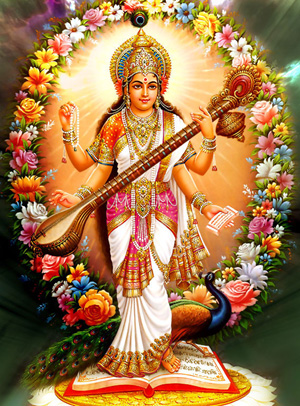
Saraswati Devi 妙音天女萨茹阿斯瓦蒂


妙音天女萨茹阿斯瓦蒂是印度教一位重要的女神.在印度最古老的经典<<梨俱吠陀>>中就有了对她的记载.她是创造之神梵天的妻子.妙音天女有着美丽的相貌,一面四臂,四只手分别拿着念珠,《吠陀圣典》,和印度传统的维那琴。她身著白色的衣服,端坐白莲花上,以天鹅或者孔雀作为自己的座骑.

妙音天女在印度教中是作为学问,智慧,艺术,音乐之神.通常受到学生,艺术家,音乐家的虔诚供奉.据说在创造之初,妙音天女化身为嘎亚垂女神传给了梵天神圣的嘎亚垂咒,满足了梵天的创造需要.

妙音天女还化身为了三大圣河之一的萨茹阿斯瓦蒂河,不过千年前就早已干枯了.每年的印度春分,印度都会举行盛大的妙音天女的祭祀,祈求天女赐予智慧的祝福.

后期的佛教密宗也将妙音天女纳入佛教作为重要的智慧本尊供奉.特别是藏密中,她也有着特殊的地位,在藏传密教中将梵文的元音字母作为妙音天女的心咒持颂, 可见妙音天女与声音之间的关系.藏密的形象一般画作两臂持琴像(传统是是被画成琵琶,估计是受到汉地的乐器影响),偶而也见四臂形象.

而在唐密之中,则还提到了有男性的妙音天.<<大日经疏五>>中说:"

  次北置萨啰萨伐底Sarasvati,译云妙音乐天,或曰辩才天,次北并置其妃。"有妃子一语,证明此天为男性.而大多数的经典提到的妙音天仍然为女性,如<<金光明经.大辩才天女品>>中所描述.唐密记载之心咒与印度教大体相同,都以妙音天女的神名作为咒体.

  西藏祈竹仁波切所著的<<本尊海会>>说"妙音母是印度教与佛教共通的一位本尊。印度教所尊的妙音母形相,佛教所修的妙音母几乎完全相同,唯一的细微分别在于外道把他的琵琶顶饰画为向外勾,而佛教则绘为向内勾。"不过此种说法,似乎仅仅是为了提高佛教本尊的地位,于佛教和印度教经典尚未见到任何关于琵琶内勾或者外勾的记载,况且妙音天女持的是维那琴,根本无所谓的内外勾之分,画师完全是根据世间的实物所绘.

  不过在同一书里他又提到:"其它的佛教本尊法门,必须配合菩提心而修方会有灵应,这妙音母却不一样。由于他是印度教及佛教共同的本尊,我们配合菩提心去修固然最好,但若无菩提心的基础而修持他的法门,一样会有灵应。这是一种例外的案例。 " 从无须发菩提心一语中,他似乎要表达此妙音天女乃印度教中本尊,因此无须发菩提心,亦能得成就.但是妙音天在佛教中却是仍被提高到了出世间的本尊地位.

  无论如何我们都可以看出妙音天女在印度教和佛教之中都有着极大的影响.是一位殊胜的女神. JAI SARASWATI MAA.

Sarasvati Beej Mantra


Kitaro Dance of Sarasvati

《图文资料来自互连网》

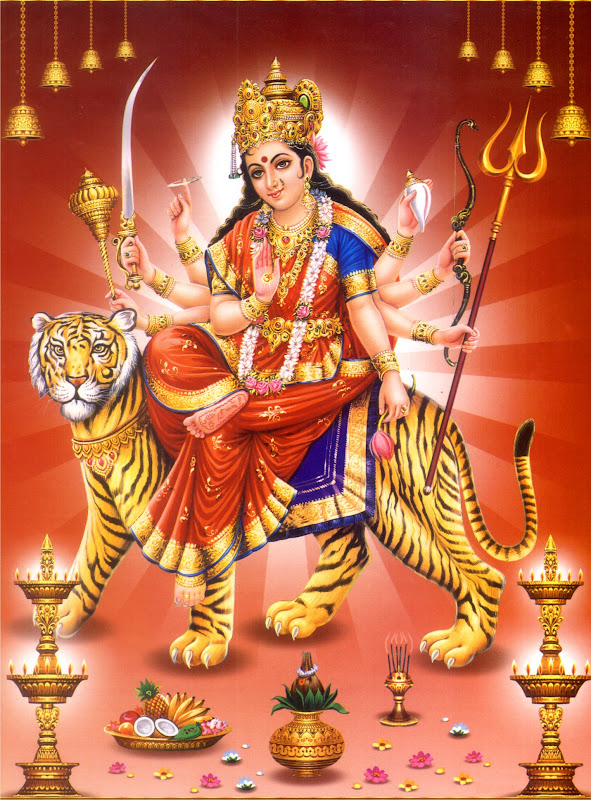
Durga Devi 胜利女神杜尔嘎


  杜尔嘎女神,印度教中最受崇拜的女神.她是湿婆大神的妻子,也被称为帕尔瓦蒂(PARVATI).杜尔迦女神通常被视为宇宙的能量,力量,因此也被称为萨克提(SAKTI,力量)女神.她也代表了幻化宇宙的力量,所以也被称为摩耶(MAYA,发音为玛亚,幻觉能量).杜尔嘎女神非常的漂亮,有着金色的皮肤,身着华丽的红色纱丽,各种珠宝为饰.她眼睛美如青莲花,头发乌黑,戴皇冠于顶上.八支手臂持各种武器坐于狮子(未杀恶魔时是老虎)之上.

  杜尔嘎女神有着许多的化身.在第一世,她被称为萨缇(SATI),作为达克沙(DAKSA)之女诞生.她嫁给了湿婆大神作为妻子.后来,达克沙因为自己的嫉妒在祭祀仪式上邀请诸神,唯独没有邀请湿婆大神参加.虽然湿婆大神毫不介意.但看见自己纯洁无染的丈夫受此侮辱,引起了萨缇女神的极大愤怒,因此女神入火瑜伽定焚烧了自己作为达克沙女儿的躯体,以洗掉自己所受的耻辱. 她的死亡引起了湿婆神的大怒,湿婆示现为怖畏之神毁掉了达克沙的祭礼,并且以此方式洗掉达克沙所犯的罪孽.然后进入深深的禅定之中.

  后来萨缇女神转世为喜马拉雅山的女儿帕尔瓦蒂.在湿婆神禅定的时候,有名叫"塔茹阿卡(TARAKA)"的阿修罗开始和诸天神作战,引起了宇宙间巨大的恐慌.梵天告诉诸天,唯有帕尔瓦蒂女神和湿婆神结婚生下的儿子可以战胜此魔.于是诸天神派谴欲天和其妻子,以及春天女神和帕尔瓦蒂女神将湿婆神唤醒.欲天发射爱箭去引诱湿婆神时,被湿婆神用第三眼发出的怒火烧为了灰尽.而帕尔瓦蒂女神因为千年的苦行将甚深禅定中的湿婆大神唤醒,重新结为夫妻,他们生下了战神塞犍陀(SKANDA,发音如斯堪达,佛教译为阴天,后期译为韦陀) 毁灭了恶魔.而欲天也重新复活,后来转世为奎师那神的儿子.

之后,有一名叫玛黑萨(MAHISA)的恶魔出现,他因为长年的苦行而得到梵天的祝福.他许下心愿自己不会被任何男神杀死,因为他心里看不起妇女,所以并没有说妇女不能杀死他. 他强大的力量几乎要征服了天界,诸天非常恐惧,于是祈祷帕尔瓦蒂女神的帮助.于是,帕尔瓦蒂女神显现为杜尔迦女神的八臂形象.所有的天神都将自己的武器送给她.湿婆神的三叉戟,维湿奴神的轮宝,海神的海螺,火神的枪,阎罗王的铁棒,风神的弓,太阳神的箭,财神的杖,因陀罗雷神的金刚杵,梵天的念珠和水罐,时间之神的剑,工巧天的斧头以及喜马拉雅所送的狮子座骑.女神展现出了愤怒的形象,将化身为水牛的恶魔玛黑萨杀死,将宇宙从罪恶之中拯救了出来.因此她被奉为战争女神,胜利女神来供奉. 

 杜尔嘎女神和湿婆神的儿子是象头神迦尼什和六面童子战神塞犍陀.他们在印度教中被视为最典范的家庭.因此许多妇女都祈求杜尔迦女神的祝福,希望得到幸福快乐的家庭生活.在著名的史诗<<罗摩衍那>>之中,罗摩神的妻子,拉克什米女神的化身悉塔也曾经祈求杜尔嘎女神,让她保佑自己嫁给罗摩神.可见杜尔嘎女神地位之重要.

Mahisasura Maridini Stotram - Complete version - PART I

《图文资料来自互连网》

Sunday, May 24, 2009

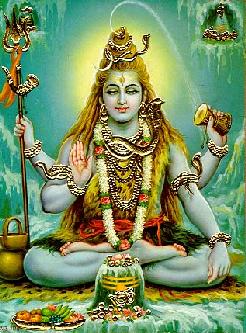
Lord Shiva 毁灭之神湿婆


湿婆,梵文SHIVA,现代汉语发音应该类似于希瓦,意思是吉祥.湿婆神是在印度受到最广泛的崇拜神之一,虽然一般人听起来,觉得毁灭之神比较恐怖.但实际上,毁灭的背后也代表了重生,与再造,所以其实他也是再生之神.当我们的身体和所有的物质在时间的老化作用下变的无用之时,他施予仁慈创造更新.他本人超越了时间,因此被称为玛哈嘎拉,MAHAKALA,超越时间的伟大之神. 藏传佛教也将玛哈嘎拉作为出世间的护法供奉.他还被称为摩醯首罗,梵文 MAHESWARA,现代发音如玛黑刷茹阿,意味大自在天.

湿婆神的形象是三只眼,头发纠结,有新月在头上作为装饰.通常在绘画中,头上还绘有恒河女神,因为恒河从天上降落人间之时,先从他的头上流下以减轻压力. 他的身上戴有头骨念珠和茹铎克沙念珠,表明他是瑜伽士.脖子上缠有代表死亡和时间的神蛇,代表他超越时间的控制.身上披有虎皮,代表他是一切力量的主人和源泉.他的武器是三叉戟,坐骑是大白公牛. 他居住的地方是位于中国的神圣的冈底斯山.

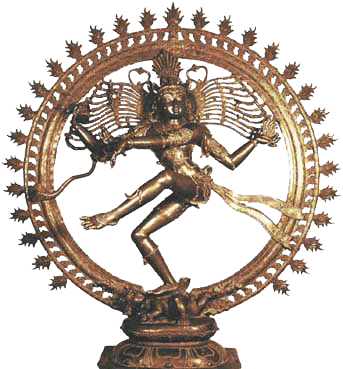
湿婆神根据不同的形象和传说,有许多不同的名字.其中一个非常有名的名字是那塔茹阿吉,梵文NATARAJ的音译,意为舞蹈之王.四臂两足,踩踏在阿修罗的身上跳着著名的坦塔瓦舞.而更多的时候,他安住于甚深的禅定之中,观察宇宙实相.

另外一个著名的名字是叫丽那堪塔,梵文nilakantha.意为青颈.传说劫初之时,天人和阿修罗为挣夺不死甘露而搅拌牛奶之洋,在牛奶之洋中搅出了一瓶巨毒的毒药威胁到了众生的安全.于是湿婆大神将其喝下,存在脖子处,脖子因此变为青色.从此湿婆神也被称为青颈之神,或者吉祥颈. 这个传说影响了后期的佛教密宗,由此故事创造了著名的青颈观世音菩萨.

  湿婆神在印度教中的地位极高,信众认为他是最容易满足的神,具有极大的慈悲心.只要带着爱心献上一滴恒河水,他就会非常高兴.湿婆神会非常快的赐予信徒合乎宗教法则的愿望.而且在印度教中,女性一直视湿婆神为最标准的丈夫,所以少女也经常祈祷他和他的妻子,祈求自己的婚姻幸福.


Very Cool Bhajan ( LORD SHIVA ) Exclusive song

《图文资料来自互连网》

Sunday, March 16, 2008

AC SarKon, Wat NongKrub


Archan Sarkon (AC sarkon) of Wat Nong Krub, the Tim Isariko's ( Luang
Phor Tim
of Wat LahanLai) number one pupil who receiving every one
of his teachings. B.E 2530 Archan Sarkon, Wat NongKrub started to make
his first Khun Pean amulet by using Prai GuMan powder by Luang Phor Tim.


AMULET NAME : KUN PENG
Year Made: 2546B.E
Material: Added Phrong Prai Guman

《图文资料来自互连网》

Saturday, March 15, 2008

LP Thuad, Wat ChangHai


Luang Phor Thuad was born in B.E 2125 (1582) in Suan Chan Village, Chumphol Dustrict, Sathing Phra in Songkla (Southern Thailand). His parent was Khun Hu and Mae Chan, a poor couple living in the place of Shrentthi Pan, the wealthy landlord. His parents name their child as
“Pu” (meaning crab).

When Pu (Luang Phor Thuad) was less than 6 months old, he was placed in a towel under a shady tree near the padi field while his mother was working.At noon she ceased work for a time in order to breast-feed him. As she walked towards the baby, she saw a huge python twine round him.She alarmed for help. The neighbours quickly gathered knives, axes and clubs and came round. The python was stern and motionless. The people around did not know what to do. No one dared to start the attack and suddenly,his mother gets an idea. With the old belief that this snake might be the god created vision. She quickly plucked seven wild flowers of different colours, put then on a leaf which served as a plate, knelt down, closed her eyes, and prayed
earnestly.The python spit out a crystal ball on the baby’s chest and left out soon. It was a brilliant crystal ball.Many people gathered round to have a look at it. His mother then kept the gem and brought him home.

A rich man offered a very good price for the crystal ball, but his mother did not wish to sell it. The rich man forced her.At last she presented it to him. The rich man was happy but for only a while. Within three days, all members in his family fell ill. He consulted a medium and was told that he had kept something which did not belong to him by right. Only the baby boy could own it.The rich man was frightened and returned the crystal ball to the baby’s mother. Within 3 months, money poured in like water. His parents became very rich. The neighbours were jealous. They stole the crystal ball. They were chased by the python till they threw it into a pit.Later a deity revealed the whereabouts of the crystal ball to his parents in their dreams, thus the precious crystal ball was recovered. His parents became more devoted to the Buddha.They generously helped the poor, made offerings to the Sangha (Monk) and built temples.

Luang Phor Thuad began to learn about the Buddhist teaching in a temple nearby at the age of 5 years old. Rather talented as he was, he mastered all subjects his teacher could guide him within a year. He went to other temples over the hill and across the jungle to acquire further teaching every day. He became a monk at the age of 12 years old and devoted a full time study in the Dharma. His father passed away at the age of 72 years old when he was 30 years old. In order to further the studies in Buddhism, he left his mother and went to other province.

From the present location, Wat Pakok, Singora, Thailand, Luang Phor Thuad took a boat sailing northward to Ayuthaya province (former capital of Thailand). After sailing for half a day, the boat met with great storms. The boat was jolted and the passengers were frightened. The boat did not arrive at its destination after drifting for several days. The store of drinking water ran short. The boatmen gathered that their previous voyages had all been very smooth.The catastrophe might have been caused by the presence of the monks.They planned to push him into the sea. He could sense their intention. He consoled them that they needed not worry
about drinking water as there was plentiful around. He stretched his leg out of the boat, the storm was pacified. With his leg, he drew a circle on the sea and told the boatmen to draw water within the circle for drinking.

The boatmen were angry at first as they did not believe that the sea water could be used for
drinking. After his assurance they made a try and found that it was actually drinkable. One purposely tasted the water outside the circle and shouted that it was salty.The boatmen were amazed and did not take further steps to harm Luang Phor Thuad.

On the next day, the boat arrived at the Ayuthaya province.Luang Phor Thuad walked for a few
miles and was happy to see a stately temple in front of him.The monks in the temple refused to accept him as he was poorly clad. He turned to an old temple not very far away. The old keeper welcomed him and offered him board and lodging. He stayed there to study the scripture, to pay
homage to the Buddha and to practised meditation for half a year.

The ruler of a neighbouring country,King of Sri Lanka sent seven monks to Ayuthaya province to test the achievements of the monks in Thailand. They brought with them 12 bowls containing 84,000 words. These words were to be arranged into a certain sutra within 1 week. If the task was accomplished, King of Sri Lanka will prepare to present Thailand with seven boats made of gold. Should the task be a failure, Thailand should surrender their sovereignty to their country. The Thai King gathered all well-known learned monks to tackle the problem. Many tried but were not successful.

Announcement was made by the court to look for someone capable of dealing with the task. On the fourth night the King dreamed of a white elephant trumpeting in dazzling light. He consulted a fortune-teller and was told that it was a good sign as a sage was likely to appear to solve the problem. The King was uncertain. On the sixth day, Luang Phor Thuad left the temple in the morning to beg for food. He arrived at a rich man’s house. The people were discussing about
that very serious topic. They saw him holding a bowl standing in front of their doors. The host reverently offered him food. He sensed that the monk in front was rather extraordinary in appearance. He paid Luang Phor Thuat due respect and told the latter that their country reputed for their Buddhist studies would be put to shame if no one could meet the challenge put forward by the neighbouring land and asked whether the latter could help in that matter. Luang Phor Thuad replied that he would try. The host was very happy. He intended to invite Luang Phor Thuat to see the King immediately. Luang Phor Thuad told him not to be hurry and would go the next morning.

After Luang Phor Thuat had left, the host broke the news to the King. On the next morning, the King sent a special carriage to bring Luang Phor Thuat to the palace. On arrival he was escorted by the officials to the entrance. The steps with loud noises as Luang Phor Thuat walked on them barefooted. The King and the officials were all very quiet. About half an hour later the monks
from the neighbouring country came in. After exchanging greetings, Luang Phor Thuad began to arrange the words. 12 bowls of words were poured on the table. He closed his eyes and arranged them with both hands. About a quarter of an hour later, he announced that 5 words were missing.

Those 7 monks remained in silence. He then warned that anyone did not quickly take out those missing words would die of cracking skull. The culprit was frightened and took out those missing words. With his eyes closed Luang Phor Thuad exercised the supernormal power to arrange the words. The sutra was completed in a little while. Seeing that Thailand was invincible, those seven monks presented those 7 boats made of gold and left.Thus Luang Phor Thuad’s name was well-known throughout the country. He was looked upon as a saintly Buddhist monk in Thai history.

Luang Phor Thuad remained in the capital city for a few years until be was informed of
his mother’s serious illness. He rushed southwards and not long after his mother died at the age of 78 years old. After the funeral he stayed back in Singora, Thailand.

A state governor from the south by the surname of Phang, a man with a comparatively dark countenance, wished to build a Buddhist temple. He came to Singora to look for a distinguished monk to head the project. One evening after sunset, he saw an old monk stroll along the seaside, leaving behind a trail of light. He knew that was the right person to approach. He stepped forward to pay due respect to the monk and told the monk his intention of building a
temple in Pattani. Luang Phor Thuad already knew the matter through his psychic power. He consented and went with the governor Phang to Pattani. When the construction was completed, the temple was named Wat ChangHai. Luang Phor Thuad was abbot to this temple till he passed away at the age of 120 years old.

For over three hundred years Luang Phor Thuat has been exercising his power to help people in danger and accidents. His images were highly esteemed for their supernormal power.

The image may protect the bearer from the disturbance by demons and relieve sufferings of a patient. Its effect in preventing accidents is especially noted.

《图文资料来自互连网》